Sunday, June 30, 2019

Saturday, June 29, 2019
Kakigori and ice kachang


Friday, June 28, 2019

Thursday, June 27, 2019


Harvesting onions


What are we going to do with so much onions? We have given some away and still have the balance as shown above. We could store some for the winter months and eat some but still it is too much for a small family like ours. Perhaps sell them at the wet market?
Tuesday, June 25, 2019
Monday, June 24, 2019
Harvesting cucumbers


It is time to harvest the cucumbers. There are lots of health benefits from eating cucumbers. It can help prevent cancer, constipation, protect your skin from the effects of aging, protect your brain from neurological diseases, help lower blood pressure etc.
To us it is a great delight to see our plants and vegetables grow from seedlings to bearing fruits.
Saturday, June 22, 2019
Harvesting, curing and storing onions


Once the onion leaves flip over onto the ground and the neck is soft then it is time to harvest them. We tied them together in bunches of four and hang them to dry. After a few days, we will cut off the stems and stored them in a dry dark place for future use.
Friday, June 21, 2019
Stabbing of Osaka police officer prompts stepped-up security ahead of G20 summit
OSAKA - Police on Monday arrested a man suspected of stabbing a police officer multiple times in Osaka Prefecture the previous day and stealing his pistol, an incident that came just days before the prefecture hosts the Group of 20 summit set to be attended by several world leaders.
Yujiro Iimori, 33, is alleged to have stabbed the officer, Suzunosuke Kose, 26, with a knife multiple times at a police box in the city of Suita, before fleeing the scene at around 5:40 a.m. on Sunday. He was carrying the gun when he was detained in the nearby city of Minoo, police said. Kose remains in critical condition.
Iimori denied the charges, saying, “It is not something I have done,” according to police. “It is because my disease got worse and because the people around me became bitter.”
He was carrying a mental disability certificate, investigators said.
The violent incident comes as police step up security in the nearby city of Osaka, which will host next week’s Group of 20 summit. Chief Cabinet Secretary Yoshihide Suga said Monday that he takes the incident seriously.
“We will boost security as we are expecting the G20 summit next week,” he said, adding that the incident has left residents greatly concerned.
While Osaka police officials are relieved that the suspect has been arrested, they remain troubled that a police officer had his weapon stolen ahead of the G20 summit, adding that identifying measures to stop similar incidents is an urgent task.
Police departments across the country have been introducing new holsters designed to prevent officers from being disarmed. Since Kose was using an older-style holster, Osaka Gov. Hirofumi Yoshimura said he will ask the central government to allocate budget to replace such holsters with the new style as soon as possible.
Iimori was put on a nationwide wanted list early Monday.
The gun was loaded with five bullets when it was stolen, but only four were found in it when Iimori was arrested, police said.
No injuries or damage has been reported since the gun was stolen but several people living near the police box where the incident occurred said they heard a sound like gunfire about 20 minutes after the attack. Police are investigating whether it was the sound of the gun being fired.
Iimori was apprehended in a mountain forest in Minoo, north of Suita, at around 6:35 a.m. Monday, after images of a person resembling him were recorded on security cameras.
When found by police, Iimori was lying on a wooden bench with a backpack under his head. The pistol was inside a plastic bag under the bench, according to police.
Authorities had been contacted by Iimori’s father, who said the suspect shown in surveillance camera footage, released by police, appeared to be his son, investigative sources said. The father said his son had been living in Tokyo until shortly before the stabbing.
A man resembling the person in the footage had stayed at a hotel in Suita on Friday, the sources added.
Kose was apparently attacked after two fellow officers left the police box to respond to an emergency call reporting a break-in at a home. Police had received a call at around 5:30 a.m. from a man at a public pay phone at Kandaimae Station, claiming that his apartment had been ransacked by a burglar.
Images from multiple security cameras taken immediately after the call showed a man running toward the police box.
The two senior police officers rushed to the apartment on motorcycles, ahead of Kose. As Kose was preparing to follow the two at around 5:40 a.m., he was stabbed seven times with a 15-centimeter cooking knife. One of the stab wounds was to the left side of his chest.
He is believed to have been attacked just as he climbed onto his motorcycle, not having had time to draw his gun to defend himself. The motorcycle was found overturned close to where Kose was found bleeding near the police box. The reported break-in later proved to be a false report.
One of Kose’s stab wounds showed that the knife blade, which passed through a gap in his bulletproof vest, penetrated his lung and reached his heart, according to investigative sources. The suspect bought a jacket and a pair of trousers at an Aeon supermarket some 5 kilometers from the police box shortly after 9 a.m. Sunday, just after it had opened for the day.
An employee at the supermarket made an emergency call to police after noticing that the customer’s hand was bloodstained.
The stabbing shocked locals, forcing supermarkets and libraries to close and public events, including flea markets, to be canceled.
Police had called on residents to lock their doors and refrain from venturing outside.
Iimori, a resident of Shinagawa Ward in Tokyo, had been working part-time as a cleaner at a golf practice range in adjacent Ota Ward since November, according to his co-workers. His father works as an executive at Kansai Television Co.
On June 10, he applied for leave, complaining of a mental health problem. Iimori initially planned to take three days off, but later told his boss that it would be difficult for him to go back to work before the end of June.
On Saturday afternoon, Iimori telephoned his boss and said that he would likely be able to start working again around June 25.
According to former classmates and a Facebook account believed to be his, Iimori graduated from Komazawa University in Tokyo after studying at elementary, junior high and high schools in Suita.
Between April and September 2009 Iimori had worked as a seaman apprentice in the Maritime Self-Defense Force. During that time he worked aboard a destroyer but never handled pistols while on duty, according to a Defense Ministry source.
In a statement, Takahisa Ishida, head of the Osaka Prefectural Police Department, said, “We apologize for the great worry we have caused local residents and appreciate the information that has been offered to investigators.”
Some locals expressed relief following the arrest of the suspect.
The above story first appeared in The Japan Times.
Wednesday, June 19, 2019
Eating fishes cured my allergy


These days I am eating more fish than meat. Fishes are nutritious especially like the one above (bream). It contains plenty of omega 3 oil which is good for the skin. Since I started eating more fish my skin allergy has disappeared. Besides being nutritious, it is cheaper than meat. Just think the steamed fish above cost about S$5. I will have to pay at least $8 to $10 in SG. Also the ones in Japan are really fresh.


Monday, June 17, 2019
A visit to Ashiya the suburb of Japan
Ashiya is a town located in Onga District, Fukuoka Prefecture, Japan. As of April 30, 2017, the town has an estimated population of 14,182 and a density of 1,200 persons per km².The total area is 11.42 km².
Ashiya is known for its Japan Air Self-Defence Force base Ashiya Air Field, and the annual sand sculpture festival held on its spacious beach.
Saturday, June 15, 2019
Saba (mackerel) fish, part of my lunch


Saba or mackerel in English contains lots of Omega 3 oil which is good for overall health, skin etc.
I've started eating not only saba but other fishes too. I prefer meat but now has turned to eating fish. It helps to combat my skin allergy. In Japan, adding fish in one's meals is very common. The Japanese eat plenty of fish and that's the main reason they do not suffer from heart attacks or strokes.
In SG, the prices of fish are exorbitant but in Japan they are inexpensive and fresh.
Read more
Friday, June 14, 2019
Vegetables & cheap freehold land


Just harvested the brinjal, piman (green pepper) cucumber and cherry tomatoes for our meals. Always dream of having a small piece of land in Singapore to grow some vegetables and flowers but couldn't afford it as land is very expensive. Here, in Japan, the land is relatively cheap. You can buy a piece of freehold land (1,200 sq ft) in Fukuoka (where I am living) for about 10 million Yen or S$122,000.
Thursday, June 13, 2019
Lunch and dessert

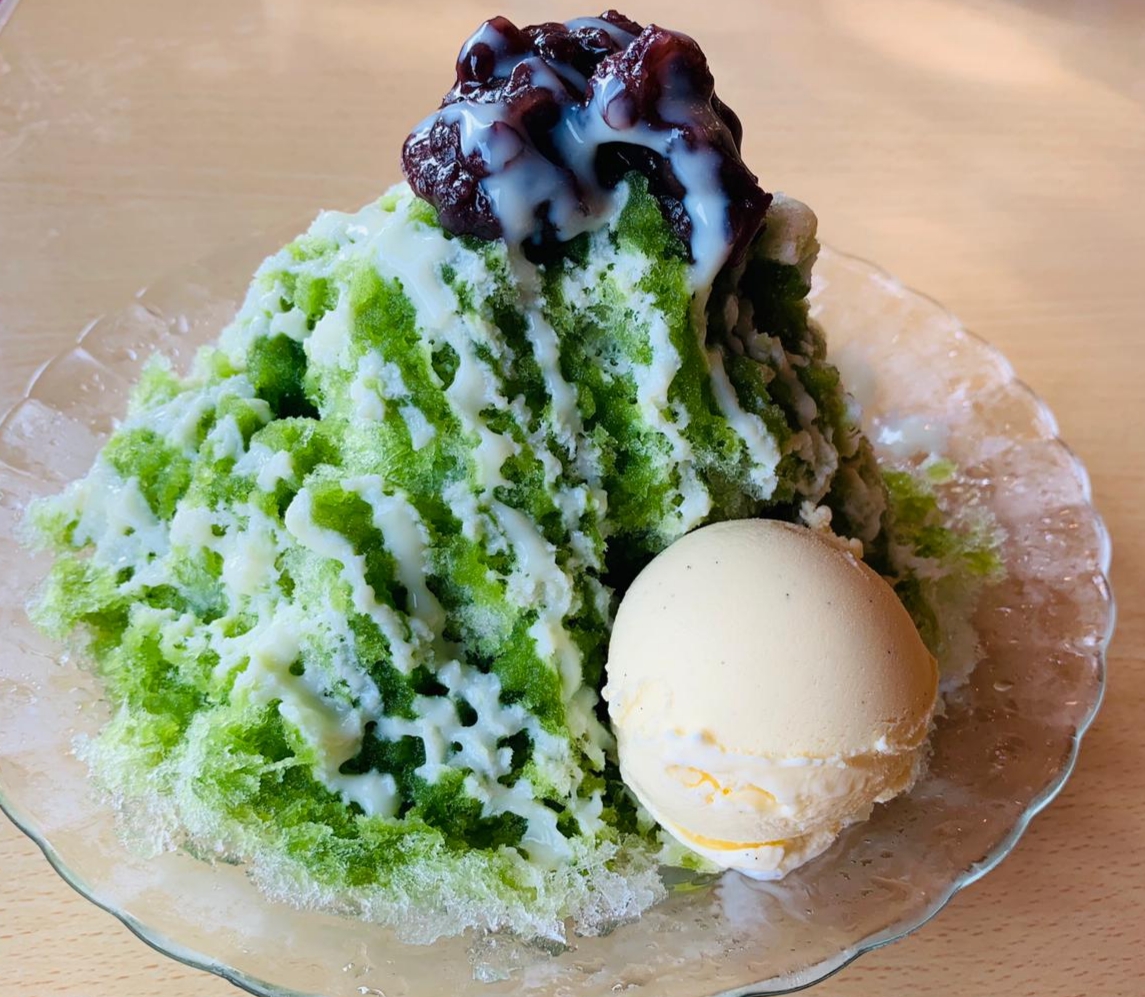
The dessert kakigori is a type of ice-kachang sold during the hot seasons. This is the green-tea kakigori with kachang and ice cream as its toppings. Needless to say, it is delicious.
Wednesday, June 12, 2019
2-year-old’s life unprotected after abuse by mother, partner reported 3 times
SAPPORO — The Hokkaido prefectural police have arrested the mother of a 2-year-old girl and her partner on suspicion of inflicting bodily harm on the girl.
The pair — Rina Ikeda, 21, a restaurant employee from Chuo Ward, Sapporo, and Kazuya Fujiwara, 24, a manager of a restaurant also from Chuo Ward — are suspected of beating and otherwise abusing the girl, Ikeda’s oldest daughter.
The girl was brought to the hospital early in the morning of June 5, where she died. A forensic autopsy determined the cause of death to be emaciation. Ikeda and Fujihara were arrested June 6.
A forensic autopsy of 2-year-old Kotori Ikeda showed her stomach to be empty, according to investigative sources.
The autopsy also indicated Kotori had been subjected to physical abuse in addition to not being fed for a long period.
The Sapporo child welfare center and the prefectural police received three reports and observed signs of abuse, yet were unable to save the life of this young child.
The sources said there was absolutely nothing in Kotori’s stomach, and they suspect she had not eaten anything in the two or three weeks prior to her death.
The cause of death was determined to be emaciation due to insufficient nutrition. Kotori weighed only about 6 kilograms, about half of what an average child her age weighs.
New and old bruises, thought to be from physical blows, were found all over her body, including on her head, face and back, indicating that she was subjected to regular abuse.
Long burn scars were found on the soles of both feet, along with what appear to be cigarette burns on her upper and lower body.
“Her body was so small, like an infant just a few months old. The scars from burns and blows were terrible to look at,” a senior investigator said.
Child welfare, police: ‘No abuse’
The child’s abuse was first reported to the child welfare center on Sept. 28, 2018. A center worker visited the home and met Kotori, but decided there was no abuse.
More than six months later, on April 5, a neighbor reported “hearing a crying child.” A center worker visited the residence, but nobody was at home. Four days later, the center finally got in touch with Ikeda, Kotori’s mother, by telephone, but after that was unable to contact her by phone.
More than a month passed without anyone confirming Kotori’s condition, when on May 12, someone called the prefectural police to report hearing a crying child. The police contacted the center, but staff there refused to accompany the police because they were not prepared for home visitations at night.
On May 15, the police met one-on-one with both Ikeda and Kotori. They found bruises on Kotori’s face and other areas, but nothing conflicted with Ikeda’s explanation that the marks came from a fall.
The police told the center there was “no abuse requiring an emergency response.” In the end, no one from the child welfare center had seen Kotori to confirm her safety since September.
The center and police provide conflicting accounts of this chain of events.
The police said they told the center to consider conducting an “official inspection,” in which staff enter the home by force with permission from a court. The center said this never happened.
And while the police said the center refused to accompany them on the May 15 visit, the center said that the police did not want center staff to come with them.
Severe worker shortage
In the wake of the death from abuse of 5-year-old Yua Funato of Meguro Ward, Tokyo, the government demanded in July last year that child welfare centers ensure they directly confirm a child’s safety within 48 hours of receiving an abuse report.
If a child’s safety cannot be confirmed, in principle an on-the-spot investigation should be conducted. However, in Kotori’s case no one from the child welfare center confirmed her safety after the April report and no on-site investigation was conducted.
In a press conference on June 6, Makoto Takahashi, the head of the Sapporo child welfare office, said, “In practice, we often don’t make it in time.”
Part of this is due to a lack of staff. Sapporo’s population of about 1.96 million people is served by 49 child welfare commissioners.
While this fulfills the staffing standard of having one commissioner for every 40,000 people, in principle, each commissioner is reportedly dealing with well over 100 cases.
The center takes calls at night, but cases not deemed urgent by senior staff members are not addressed until the next morning.
The story first appeared at The Yomiuri Shimbun
The pair — Rina Ikeda, 21, a restaurant employee from Chuo Ward, Sapporo, and Kazuya Fujiwara, 24, a manager of a restaurant also from Chuo Ward — are suspected of beating and otherwise abusing the girl, Ikeda’s oldest daughter.
The girl was brought to the hospital early in the morning of June 5, where she died. A forensic autopsy determined the cause of death to be emaciation. Ikeda and Fujihara were arrested June 6.
A forensic autopsy of 2-year-old Kotori Ikeda showed her stomach to be empty, according to investigative sources.
The autopsy also indicated Kotori had been subjected to physical abuse in addition to not being fed for a long period.
The Sapporo child welfare center and the prefectural police received three reports and observed signs of abuse, yet were unable to save the life of this young child.
The sources said there was absolutely nothing in Kotori’s stomach, and they suspect she had not eaten anything in the two or three weeks prior to her death.
The cause of death was determined to be emaciation due to insufficient nutrition. Kotori weighed only about 6 kilograms, about half of what an average child her age weighs.
New and old bruises, thought to be from physical blows, were found all over her body, including on her head, face and back, indicating that she was subjected to regular abuse.
Long burn scars were found on the soles of both feet, along with what appear to be cigarette burns on her upper and lower body.
“Her body was so small, like an infant just a few months old. The scars from burns and blows were terrible to look at,” a senior investigator said.
Child welfare, police: ‘No abuse’
The child’s abuse was first reported to the child welfare center on Sept. 28, 2018. A center worker visited the home and met Kotori, but decided there was no abuse.
More than six months later, on April 5, a neighbor reported “hearing a crying child.” A center worker visited the residence, but nobody was at home. Four days later, the center finally got in touch with Ikeda, Kotori’s mother, by telephone, but after that was unable to contact her by phone.
More than a month passed without anyone confirming Kotori’s condition, when on May 12, someone called the prefectural police to report hearing a crying child. The police contacted the center, but staff there refused to accompany the police because they were not prepared for home visitations at night.
On May 15, the police met one-on-one with both Ikeda and Kotori. They found bruises on Kotori’s face and other areas, but nothing conflicted with Ikeda’s explanation that the marks came from a fall.
The police told the center there was “no abuse requiring an emergency response.” In the end, no one from the child welfare center had seen Kotori to confirm her safety since September.
The center and police provide conflicting accounts of this chain of events.
The police said they told the center to consider conducting an “official inspection,” in which staff enter the home by force with permission from a court. The center said this never happened.
And while the police said the center refused to accompany them on the May 15 visit, the center said that the police did not want center staff to come with them.
Severe worker shortage
In the wake of the death from abuse of 5-year-old Yua Funato of Meguro Ward, Tokyo, the government demanded in July last year that child welfare centers ensure they directly confirm a child’s safety within 48 hours of receiving an abuse report.
If a child’s safety cannot be confirmed, in principle an on-the-spot investigation should be conducted. However, in Kotori’s case no one from the child welfare center confirmed her safety after the April report and no on-site investigation was conducted.
In a press conference on June 6, Makoto Takahashi, the head of the Sapporo child welfare office, said, “In practice, we often don’t make it in time.”
Part of this is due to a lack of staff. Sapporo’s population of about 1.96 million people is served by 49 child welfare commissioners.
While this fulfills the staffing standard of having one commissioner for every 40,000 people, in principle, each commissioner is reportedly dealing with well over 100 cases.
The center takes calls at night, but cases not deemed urgent by senior staff members are not addressed until the next morning.
The story first appeared at The Yomiuri Shimbun
Tuesday, June 11, 2019
Two types of tomatoes


Last season we grew only one type of tomatoes i.e. cherry tomatoes. This season we grow two types, the cherry and large tomatoes. Still waiting for them to grow bigger and riper before we pluck them. Another month perhaps.
Subscribe to:
Comments (Atom)